
Evolution of Natural Landscape Stones in New Chinese Style Gardens
Evolution of Natural Landscape Stones in New Chinese Style Gardens
Stones form the skeleton of gardens, and water forms the vein of gardens. As the core landscaping element of traditional Chinese gardens, natural landscape stones carry the heritage and artistic conception of oriental gardening culture spanning thousands of years. From the literati sentiment and stacked rock landscapes of classical gardens to the minimalist empowerment and scene integration of modern new Chinese style gardens, the application logic, material selection, landscaping techniques and functional value of natural landscape stones have undergone disruptive changes. Abandoning the complexity of traditional gardening and extracting the essence of classical aesthetics to meet modern spatial needs, new Chinese style gardens have upgraded natural landscape stones from simple ornamental decorations into core carriers for spatial shaping, atmosphere creation, cultural inheritance and practical functionality, making them iconic elements in contemporary landscape design.
1. Classical Application Forms of Landscape Stones in Traditional Chinese Gardens
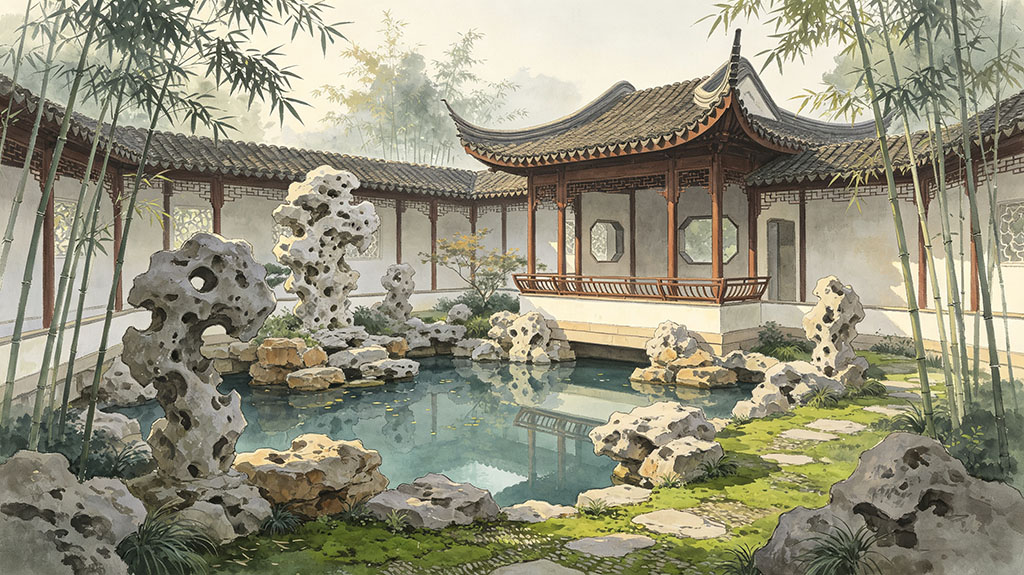
In the traditional Chinese garden system, the core application of natural landscape stones lies in artistic conception creation and literati emotional expression, following the classical gardening philosophy of "substituting a handful of stones for mountains and a spoonful of water for rivers" to pursue ultimate artistic conception aesthetics. From the Pre-Qin and Han dynasties to the Tang Dynasty, garden stone placement centered on mountain worship. Large intact stones and stacked stones were widely used to simulate the grandeur of famous mountains and rivers, serving the ritual atmosphere of royal gardens and noble mansions with solemn and regular landscaping that emphasized momentum.
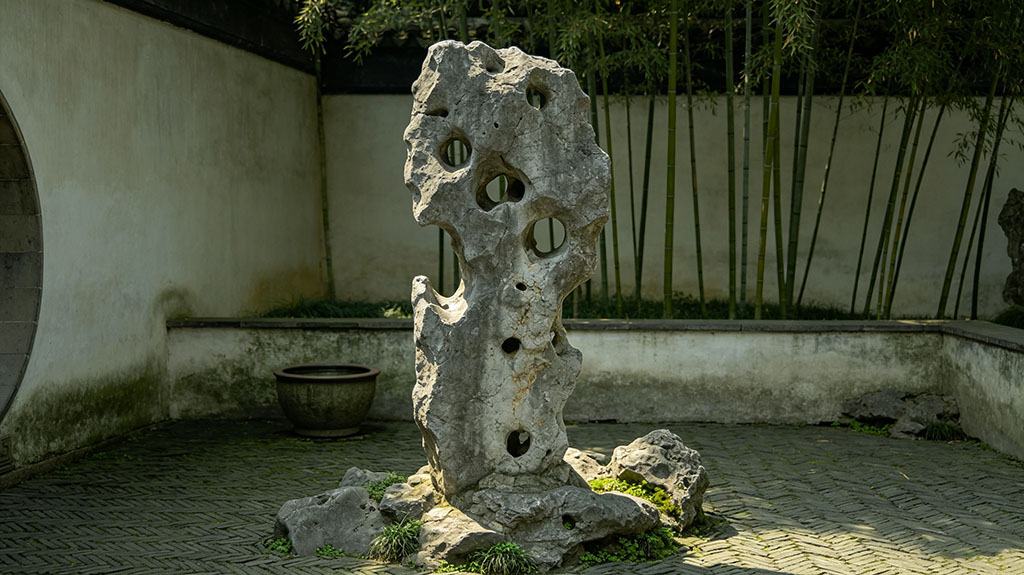
From the Song and Yuan dynasties to the Ming and Qing dynasties, literati gardening flourished, and the aesthetics and application of landscape stones became mature. The Song Dynasty advocated the aesthetic concept of "rugged yet elegant stones". Taihu stones, Lingbi stones and yellow stones became mainstream materials, valued for their natural textures of "slender, transparent, leaky and wrinkled". They were mostly applied as independent ornamental stones or stacked rockeries for appreciation, embodying the literati’s pursuit of tranquility and natural detachment. Gardening craftsmanship reached its peak in the Ming and Qing dynasties, with refined landscape stone applications combined with ponds, green plants, pavilions and winding paths to create diverse and layered garden views. However, the applications were limited to pure ornamentation with emphasis on artistic conception rather than practicality, featuring complex manual stacking techniques, cumbersome layouts and single applicable scenarios.
Traditional garden landscape stones are defined by cultural value overriding practical value. Every placed stone and stacked rockery embodies poetic and artistic sentiments, yet fails to adapt to the minimalist style, compact space and daily practical needs of modern architecture.
2. Core Reforms of Landscape Stone Applications in New Chinese Style Gardens
With the upgrading of modern living aesthetics and iterative innovation in landscape design, new Chinese style gardens have broken the shackles of traditional gardening. Instead of rigidly copying classical complicated forms, they extract the core of Chinese aesthetics, simplify external forms and integrate modern functions, realizing an all-round transformation of natural landscape stones from classical artistic conception orientation to modern practical orientation. The evolution is mainly reflected in four dimensions: material selection, landscaping techniques, functional value and scenario layout.
2.1 Material Selection Evolution: From Exotic Ornamental Stones to Versatile Natural Raw Stones
Traditional Chinese gardens pursued the unique textures of Taihu stones and Lingbi stones, which are niche, costly, poorly adaptable and prone to visual clutter due to their complicated shapes. In contrast, new Chinese style gardens abandon excessive pursuit of exotic stone materials and prioritize naturally textured, simple and steady-toned natural landscape stones. Black mountain stones, yellow pebbles, grey crushed stones, natural fractured landscape stones and washed stone raw stones have become mainstream choices.
These stones retain natural fractured surfaces, subtle sandy textures and original color differences without artificial polishing or standardized cutting industrial textures. With low-saturation and high-grade tones including black, grey and beige, they perfectly fit oriental minimalist aesthetics and match the minimalist architectural style of modern villas, residential communities, sales offices and municipal parks. Meanwhile, they feature lower costs, sufficient supply and suitability for large-scale engineering construction.
2.2 Landscaping Technique Evolution: From Complex Stacking to Minimalist Blank Space Design
Traditional garden landscape stones adopted dense stacked rockeries and winding stone layouts to create rich and varied views. New Chinese style gardens follow the design logic of "less is more", simplifying complexity and pursuing blank space aesthetics to completely subvert traditional landscaping modes.
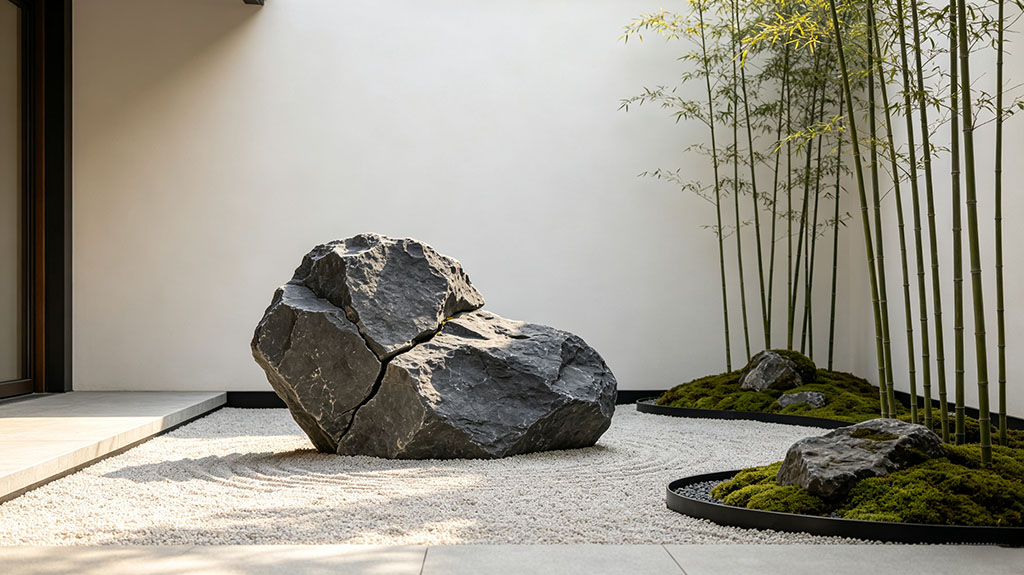
Complicated manual stacking is replaced by four minimalist techniques: single stone focal decoration, slab stone mountain simulation, scattered stone paving and crushed stone blank landscaping. A single natural landscape stone can serve as the visual focus of the space. Matched with dry landscape paving of black crushed stones, shallow water systems and slender bamboos, it simulates magnificent mountain and river artistic conception in a limited space and creates a distant Zen atmosphere. Abandoning rigid symmetrical layouts, it adopts scattered and irregular arrangements to fit the transparency and comfort of modern spaces, eliminating the depression and complexity of traditional gardens.
2.3 Functional Value Evolution: From Pure Ornamentation to Integrated Landscape and Practical Functions
This is the most critical evolution of new Chinese style landscape stones. Traditional landscape stones only serve ornamental and emotional expression functions with no practical value. In modern new Chinese style gardens, natural landscape stones achieve in-depth integration of landscape aesthetics and practical functionality.
Beyond ornamental value, placed stones can be used as garden retaining stones, path edging stones and tree pool border stones for spatial division, terrain arrangement and protection. Scattered stones such as black crushed stones and yellow pebbles are widely applied in pavement paving, tree pool covering and gully landscaping, providing anti-slip, drainage, weed inhibition and dust prevention effects. Natural slab stones can be used to build landscape walls, steps and water revetments with durable and natural textures. They have evolved from pure visual landscapes into functional landscape materials that are ornamental, practical and easy to maintain, meeting the daily living needs of modern residents.
2.4 Scenario Application Evolution: From Exclusive Private Gardens to Universal Public Landscapes
Traditional landscape stone landscaping was limited to royal mansions and literati private gardens with narrow coverage and single scenarios. New Chinese style gardens break spatial barriers, enabling natural landscape stones to be applied in diverse public landscape scenarios, including villa courtyards, residential landscapes, sales office display areas, municipal parks, cultural tourism scenic spots, homestay courtyards and commercial front spaces.
Adapted to the lightweight and standardized construction requirements of modern landscapes, they eliminate the complex manual craftsmanship of traditional rock stacking, featuring convenient construction and simple maintenance for large-scale batch implementation. The ancient Chinese stone landscape aesthetics have transformed from niche elegant art into accessible daily landscapes for the public.
3. Future Application Trends of New Chinese Style Landscape Stones
Modern landscape design increasingly pursues naturalization, lightweight, ecologicalization and simplification, driving the continuous iteration of natural landscape stone applications. Future designs will further reduce artificial carving traces and maximize the retention of natural stone textures and fractured surfaces. Combined with dry landscape design, micro-terrain landscaping and minimalist water system landscapes, it will create natural gardens conforming to the philosophy of "harmony between man and nature". Meanwhile, it will focus more on low-cost, highly adaptable and low-maintenance landing solutions that balance aesthetic value and engineering practicality.
After thousands of years of evolution, natural landscape stones have developed from spiritual carriers of literati culture in classical gardens to core aesthetic elements of modern new Chinese style gardens. While inheriting the essence of oriental gardening artistic conception, they keep innovating application forms to adapt to the times. Supported by modern minimalist aesthetics and ecological landscape concepts, natural landscape stones have become irreplaceable core elements of new Chinese style gardens, continuously inheriting and interpreting the unique charm of oriental courtyards.